The Imagery of Luigi Serafini at Orticolario
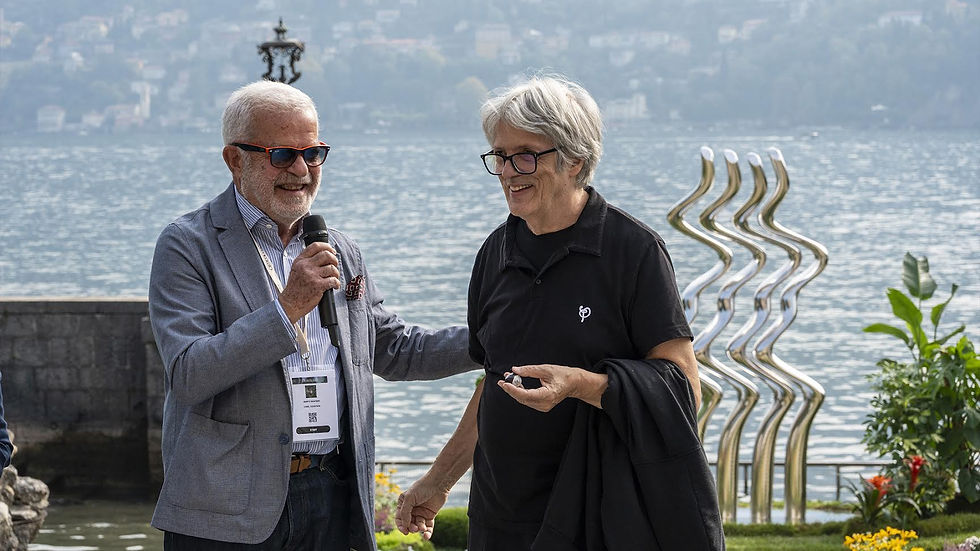
Luigi Serafini, the artist and visionary creator of the Codex Seraphinianus (1981), was the special guest at the event at Villa Erba in Cernobbio, which celebrated the wonders of the botanical world. On the occasion, Serafini received the 2026 Premio per un Giardinaggio Evoluto
Di Primavera Fisogni
Ho incontrato Luigi Serafini, artista immaginifico, per la prima volta nelle pagine di un periodico che l'editore - Franco Maria Ricci - considerava "la rivista più bella del mondo". Era l'autunno del 1982. Una dozzina di pagine di FMR, patinato giornale d'arte, che annoverava tra i suoi collaboratori anche Vittorio Sgarbi, presentava il Codex Seraphinianus. La prima impressione che quelle immagini di corpi animati, umani ed animali, che si tramutavano in oggetti o in piante surreali, faceva pensare a una creatività accelerata, nella quale si coglievano elementi precisi di un'estetica coltissima, in grado di abbracciare le inquietudini di Hieronymus Bosch e la follia di Dalì in una dimensione pop, coloratissima e dinamica. I disegni, infatti, erano strutturati come fotogrammi e, nell'insieme, quelle pagine di FMR dedicate al mondo straordinario di Luigi Serafini, romano, nato nel 1949, all'epoca poco più che trentenne, apparivano come una sorta di piano-sequenza. Un processo metamorfico accompagnato, se possibile enfatizzato, da una lingua corsiva pure inventata, ma come le immagini evocativa di altri alfabeti, come quello etiopico.
Da allora Serafini si è imposto come artista, termine che egli definisce come l'esito di "una chiara fama", autore di dipinti in varie tecniche, installazioni, oggetti d'arredo e molto altro.
Grazie a Orticolario, il festival di giardinaggio evoluto in corso in questi giorni a Villa Erba di Cernobbio, è venuto alla luce il profilo genetico di quella lussureggiante creatività.

Questa mattina, nel Padiglione Centrale, l'artista romano - nel ricevere il Premio per un Giardinaggio Evoluto 2026 - ha raccontato la genesi delle proprie opere, aprendo tutti insieme i cassetti della propria creatività, sollecitato dalla conversazione con Chiara Rostagno, storica dell'arte e vicedirettore generale dell'Accademia di Brera di Milano.
Dal viaggio americano con la Reflex, che ha tracciato una rotta stilistica e grafica, all'incontro con il collettivo Memphis di Milano e con Sottsass, alle prime, ma decisive esperienze di home design, fino agli oli su tela e oltre, la narrazione ha tratteggiato una ricerca personale improntata alla meraviglia dell'essere.
Non capita spesso ascoltare un artista decostruire il proprio percorso, con la leggerezza del distacco. Questo ha sicuramente fatto la differenza, rendendo l'incontro un momento da ricordare, sia per chi trova nell'arte un alimento spirituale indispensabile, sia per chi, capitato al festival del giardinaggio evoluto, magari cercava di capire perché l'ospite d'onore fosse proprio Luigi Serafini. Dedicato alla dimensione sospesa tra sogno e reale, Orticolario è stato per Serafini medesimo un'occasione di indagine della propria estetica. Che cosa alimenta l'arte onirica, all'apparenza giocosa, in verità percorsa da una densa inquietudine, delle sue tavole e delle installazioni? L'autore ha essenzialmente indicato nella capacità di cogliere connessioni, di leggere somiglianze e nella sapiente disponibilità a lasciarsi interpellare dal mondo della vita, la chiave della propria vocazione a creare.
L'umiltà dell'artista si è fatta apprezzare almeno quanto la sensibilità dell'uomo, nel ricordare con affetto il critico Vittori Sgarbi, in una fase molto delicata della propria esistenza.
La laudatio di Luigi Serafini
“Per la sua genialità, per la sua visione libera e anarchica, per la caparbietà con cui, nel corso della sua straordinaria carriera, ha scelto di non seguire le regole, ma di inventarne di nuove. Per aver dedicato alla natura uno spazio speciale e profondissimo nella sua ricerca artistica, restituendole forme, creature, linguaggi e possibilità che appartengono tanto al mondo reale quanto a quello dell’immaginazione. Per aver saputo guardarla oltre i confini della conoscenza, trasformandola in un universo fantastico, capace di interrogare il nostro sguardo e di restituirci il senso dello stupore. Questo riconoscimento arriva in un momento particolarmente difficile, Orticolario desidera quindi che questo premio sia anche un gesto di vicinanza e di solidarietà verso chi, attraverso l’arte, continua a immaginare nuovi mondi. A Luigi Serafini, per averci ricordato che anche la natura può essere un atto di immaginazione e che, qualche volta, per tornare a guardare il mondo con occhi nuovi, è necessario avere il coraggio di non comprenderlo, ma sognarlo ad occhi aperti” – ha motivato Moritz Mantero, Presidente di Orticolario durante il conferimento del premio.
English text
I first encountered Luigi Serafini, an artist of extraordinary imagination, in the pages of a magazine whose publisher, Franco Maria Ricci, regarded it as “the most beautiful magazine in the world.” It was the autumn of 1982. A dozen or so pages of FMR, the glossy art magazine that counted Vittorio Sgarbi among its contributors, introduced readers to the Codex Seraphinianus.
The first impression created by those images—animated human and animal forms transforming into surreal objects and plants—was of a kind of accelerated creativity, in which unmistakable elements of an extraordinarily sophisticated aesthetic came together: the unease of Hieronymus Bosch and the madness of Dalí, refracted through a pop sensibility that was colourful, vibrant and kinetic. The drawings were, in fact, conceived like individual frames in a film, and taken as a whole, those pages of FMR devoted to the extraordinary world of Luigi Serafini—a Roman, born in 1949, then barely in his thirties—seemed almost like a single tracking shot. A process of metamorphosis accompanied, and perhaps intensified, by a flowing script that was itself invented, yet, like the images, evocative of other writing systems, such as the Ethiopian alphabet.
Since then, Serafini has established himself as an artist—a term he defines as the result of having achieved “a clear renown”—creating paintings in a variety of techniques, installations, furniture and design objects, and much more besides.
Thanks to Orticolario, the festival of contemporary gardening currently taking place at Villa Erba in Cernobbio, the creative DNA behind that luxuriant imagination has now come into focus.
An botanical page from the Codex
This morning, in the Central Pavilion of Orticolario, Serafini received the 2026 Award for Evolved Gardening and spoke about the genesis of his work, opening up the drawers of his creative imagination one by one in a conversation with Chiara Rostagno, art historian and Deputy Director General of the Brera Academy in Milan.
From his journey through America with a reflex camera, which helped chart a new stylistic and graphic direction, to his encounter with Milan’s Memphis group and Ettore Sottsass; from his first, but decisive, experiences in home design to his oil paintings on canvas and beyond, the conversation traced the course of a personal artistic inquiry grounded in a sense of wonder at being alive.
It is not often that one hears an artist deconstruct his own journey with such lightness and detachment. That undoubtedly made all the difference, turning the encounter into a memorable occasion both for those who find in art an indispensable form of spiritual nourishment and for those who, having come to a festival devoted to contemporary gardening, may have wondered why Luigi Serafini was its guest of honour.
Dedicated to the space suspended between dream and reality, Orticolario offered Serafini himself an opportunity to investigate the foundations of his own aesthetic. What feeds the dreamlike art of his drawings and installations—apparently playful, yet in reality threaded through with a profound sense of unease? The artist essentially pointed to his ability to perceive connections, recognise resemblances, and remain intelligently open to being questioned by the living world as the key to his creative vocation. The artist’s humility was appreciated every bit as much as the man’s humanity and sensitivity, particularly in the affection with which he recalled Vittorio Sgarbi during a particularly difficult period in his life.
The Laudatio for Luigi Serafini
“For his genius, for his free and anarchic vision, and for the determination with which, throughout his extraordinary career, he has chosen not to follow the rules, but to invent new ones. For having given nature a special and profoundly significant place within his artistic research, returning to it forms, creatures, languages and possibilities that belong as much to the real world as to the realm of the imagination. For having learned to look at nature beyond the boundaries of knowledge, transforming it into a fantastical universe capable of challenging the way we see and restoring to us our sense of wonder.
“This recognition comes at a particularly difficult moment. Orticolario therefore wishes this award also to be a gesture of closeness and solidarity towards those who, through art, continue to imagine new worlds.
“To Luigi Serafini, for reminding us that nature itself can be an act of imagination, and that sometimes, in order to look at the world with fresh eyes once again, we must have the courage not to understand it, but to dream it with our eyes wide open.”
These were the words of Moritz Mantero, President of Orticolario, as he presented the award.


Comments